Ludlow, Colorado
By the spring of 1914, 1200 coal miners and their families, organized by the United Mine Workers of America, had been on strike for nearly eight months. They protested low-wage company scrip, redeemable only at company-owned stores, company-controlled housing and the extremely unsafe working conditions. Colorado had one of the highest mining fatality rates in the country. As evictions from company housing increased, a tent colony grew just outside the town of Ludlow.
South Colorado is no stranger to ghostly outlines against the Sangre de Cristos skyline. Las Animas County, founded under territorial law in 1866, not yet a year from the confederate army’s surrender at Appomattox, takes its name from the Purgatoire River. Mexicans and Spanish once called the area, El Río de las Ánimas Perdidas en el Purgatorio, the River of the Lost Souls in Purgatory. The story of unblessed hearts in limbo is long here.
As the bitter stalemate continued, tension rose when the Colorado National Guard arrived along with members of the Baldwin–Felts Detective Agency, private guards hired by the Colorado Fuel & Iron Company. The private militarized police force would come to the defense of coal mine owners once again, a pattern that would be repeated seven years later, most notoriously in Matewan, West Virginia, where their assassination of police chief Sid Hatfield ignited the Battle of Blair Mountain in 1921, the largest armed labor uprising since the American Civil War. Ten thousand miners, armed, descended on 3,000 lawmen and company gun thugs during the workers' attempt to unionize the southwestern West Virginia coalfields.
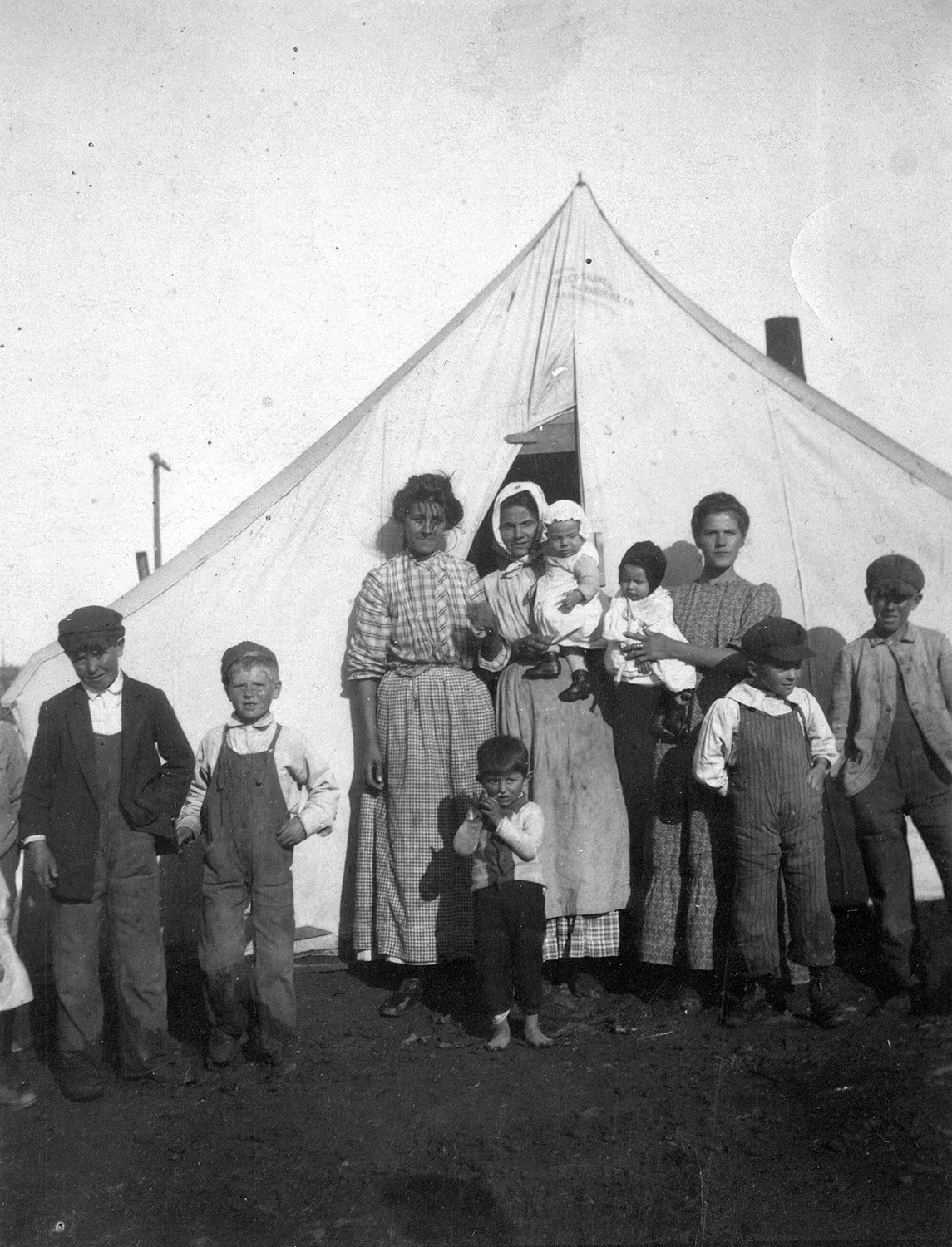
The families of striking coal miners stand outside of a tent at the Ludlow colony.
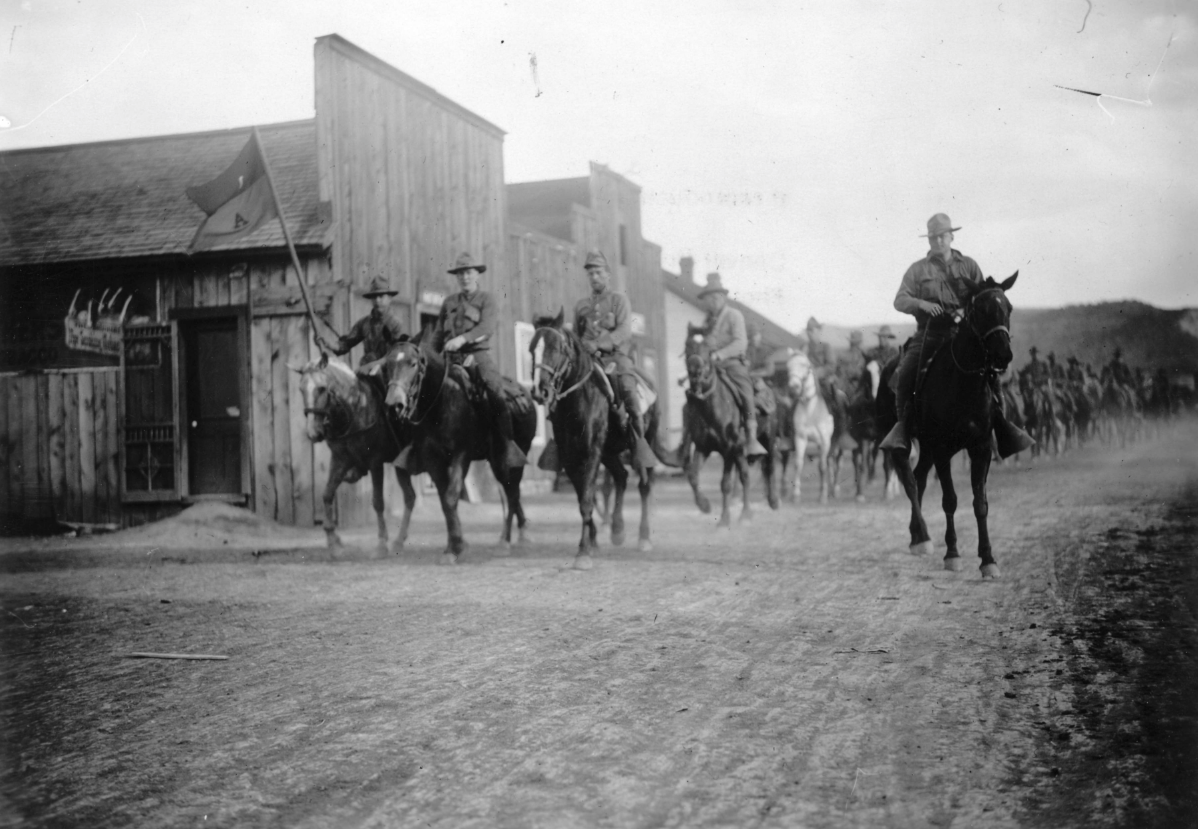
Lt. Karl Linderfelt, right, and the Colorado National Guard ride in on horseback to suppress the strike.
The Ludlow colony faced armed patrols, harassment, and intimidation from the private army. Sporadic small arms gunfire could be heard throughout the valley. Because of these escalations, miners and their families believed an attack was imminent. They dug defensive trenches while union leaders attempted to mediate and prevent violence.
A week earlier, Governor Elias M. Ammons had withdrawn most of the Colorado National Guard from the coalfields. Now, under Lieutenant Karl E. Linderfelt, a former mine guard and described as a brutal man in congressional testimony about his actions at Ludlow, most of the remaining Guardsmen were effectively aligned with company interests. This compromised force obscured the line between public authority and private enforcement. Rather than acting as a neutral buffer, the Guard was seen as an extension of corporate power, creating a greater threat to the miners.
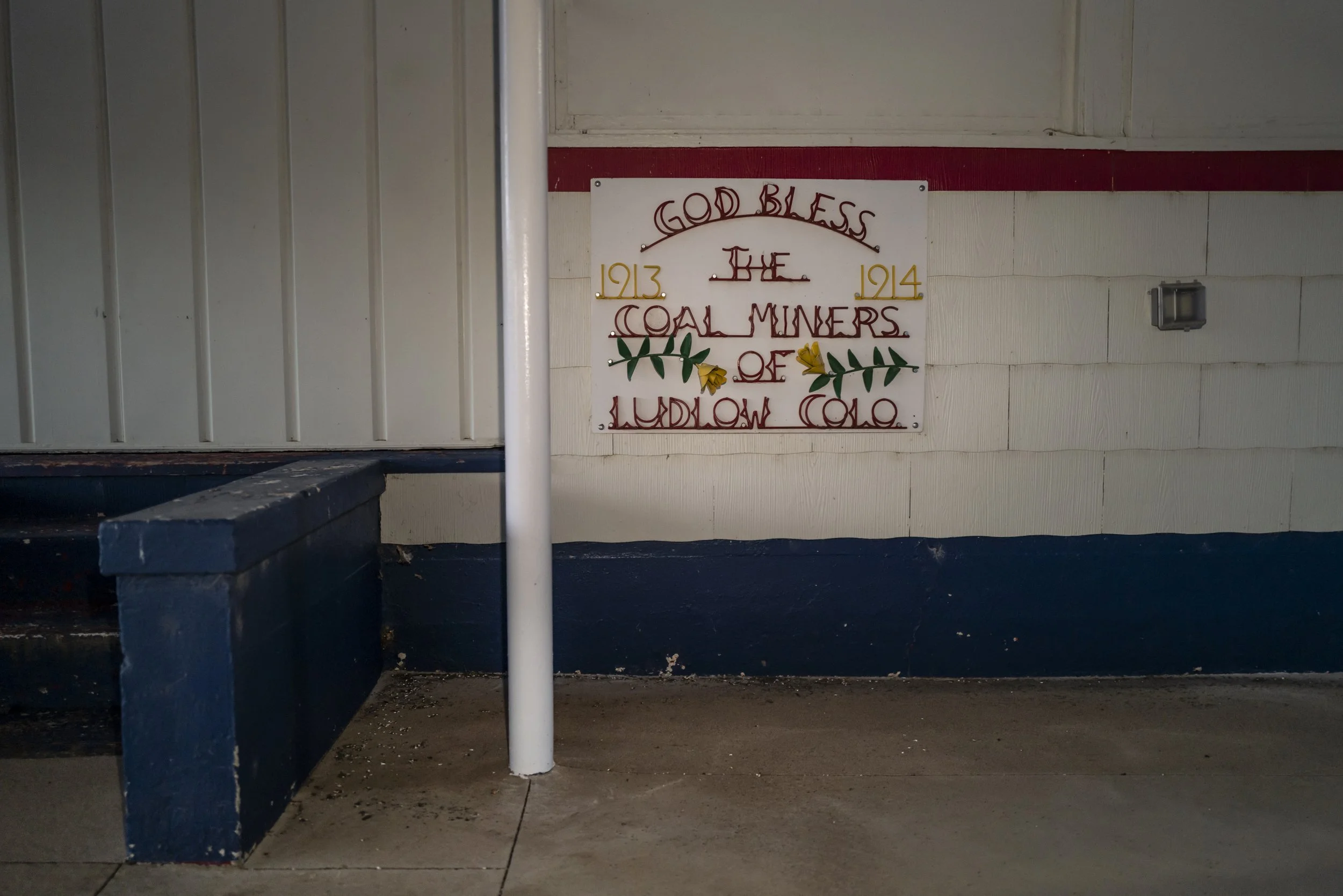
Interior wall message honoring coal miners at the Ludlow Massacre site in Colorado, reflecting the lasting impact of the 1914 tragedy.
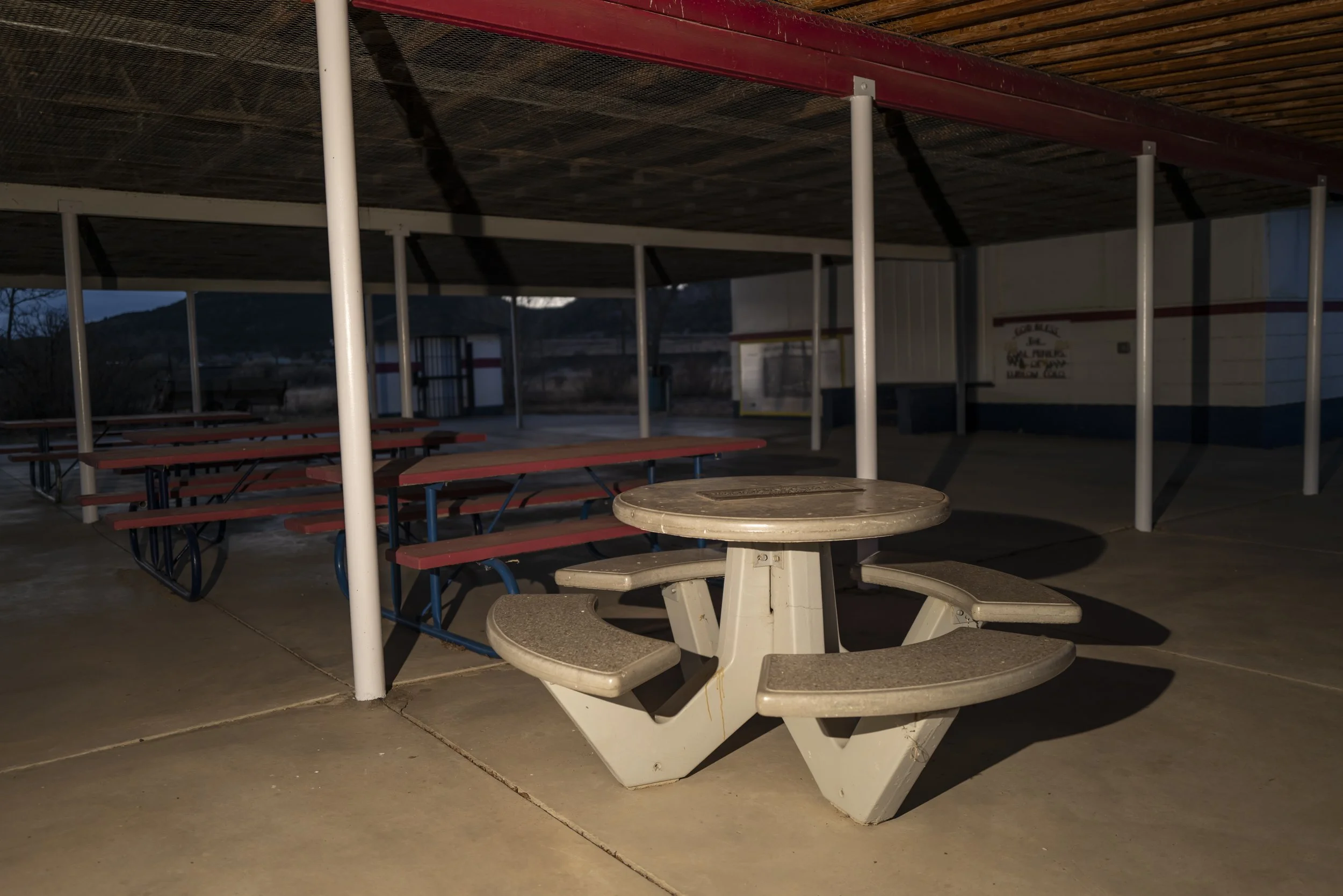
Ludlow Massacre site showing an empty shelter and picnic area in southern Colorado.
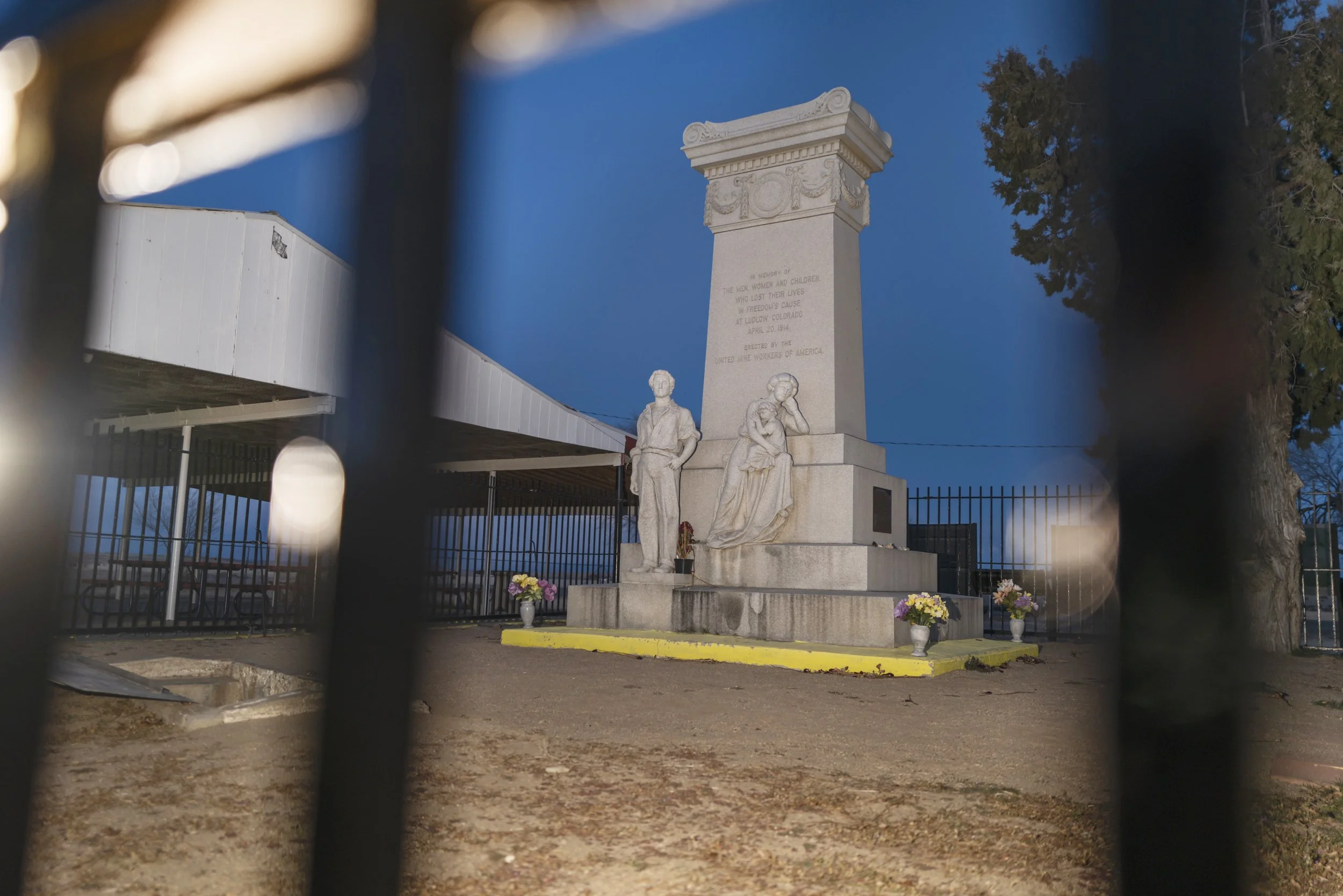
Ludlow Massacre Monument in Ludlow, Colorado, honoring the men, women, and children who died during the 1914 labor conflict.

Dried flowers at the Ludlow Massacre memorial site.
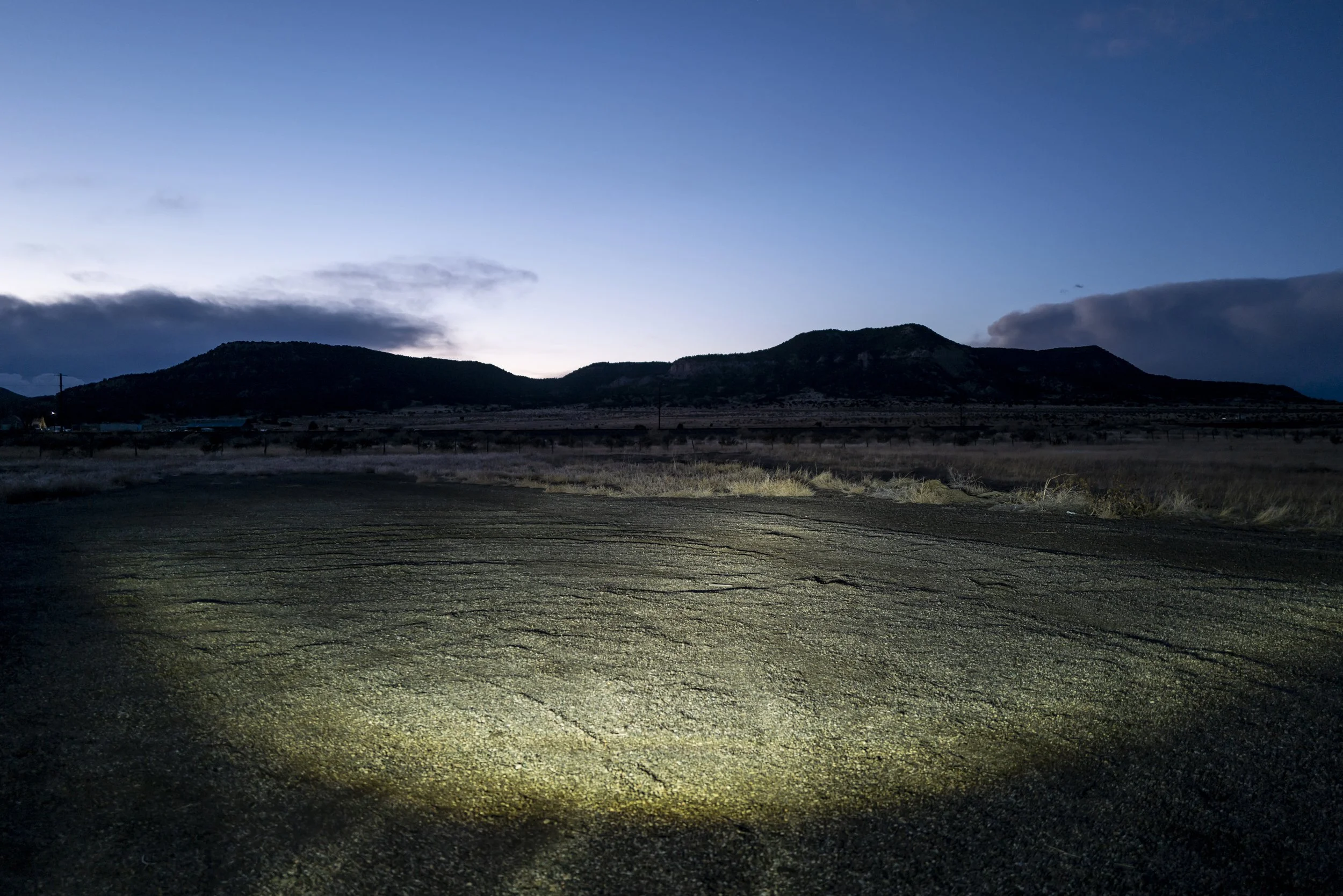
Headlights illuminating the ground where the 1914 mining strike took place.
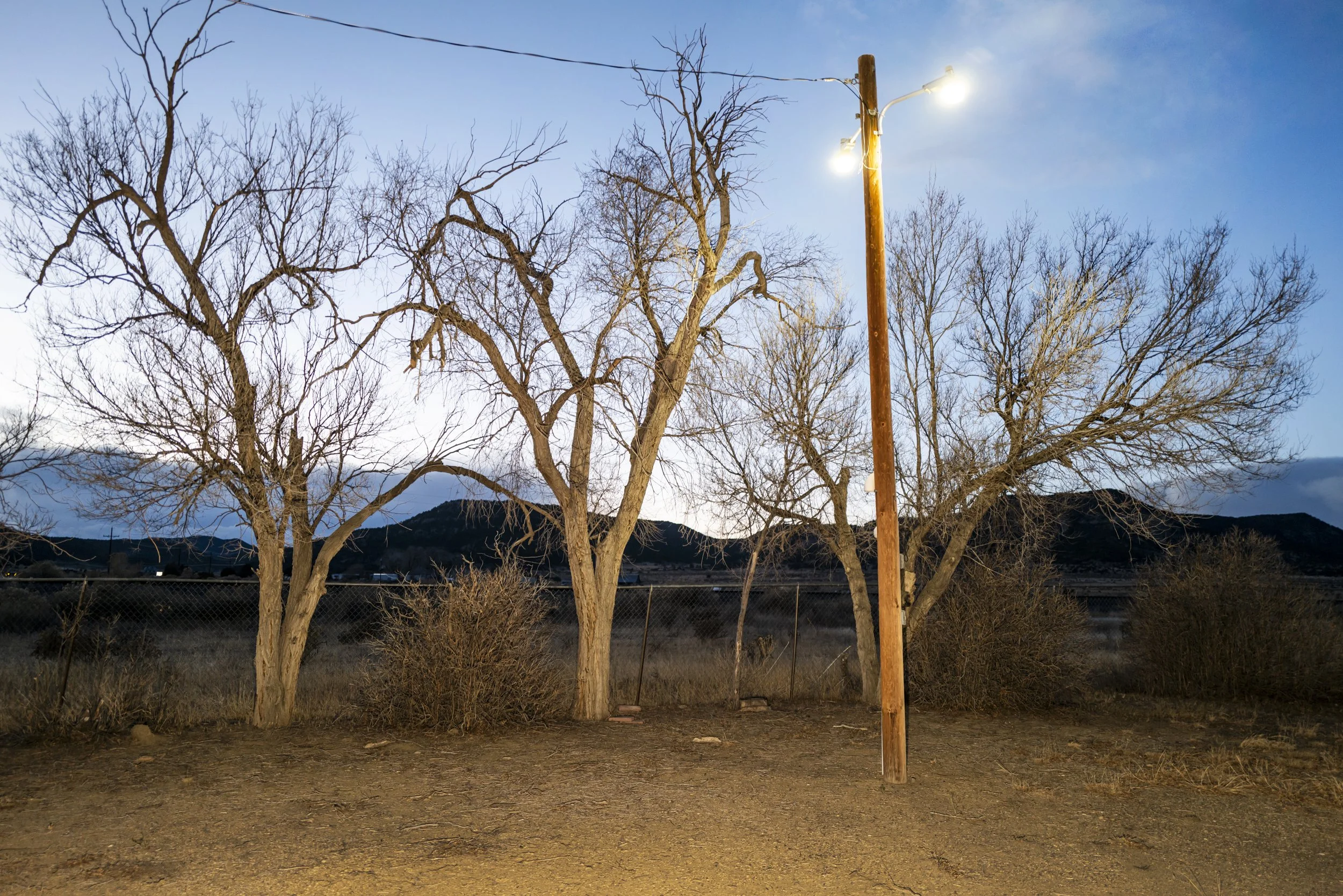
Bare trees and a single light pole stand at dusk near the Ludlow Massacre site.
The April weather at the base of the mountain range has always been a battlefield. Stained with a light pink alpenglow that shifts to rich reds in the setting sun, reminded early Spanish explorers of the spilled blood of Christ. The confluence of winter and summer winds fighting for control of the high country tugs at the tent colony’s canvas roofs, two worlds clashing, one built on capital and one on the labor that feeds it.
This charged atmosphere culminates on the morning of April 20, 1914, when the Guard positions machine guns on the high ground above the strikers’ tents and demands the release of a man they claim is held in the camp. Union leader Louis Tikas again tries to mediate, unaware that the demand may be a pretext for an attack.
In the violence-consumed chaos that followed, miners and their families were pushed to exposed ground, with the prairie offering no cover from gunfire. Children were evacuated into cellars dug beneath the tents, and as the raid continued, smoke from spreading tent fires settled low. The losses were catastrophic. The next day, eleven children and two women were found dead from smoke inhalation. News of the tragedy circulated quickly, prompting national outrage at the failed siege turned massacre.
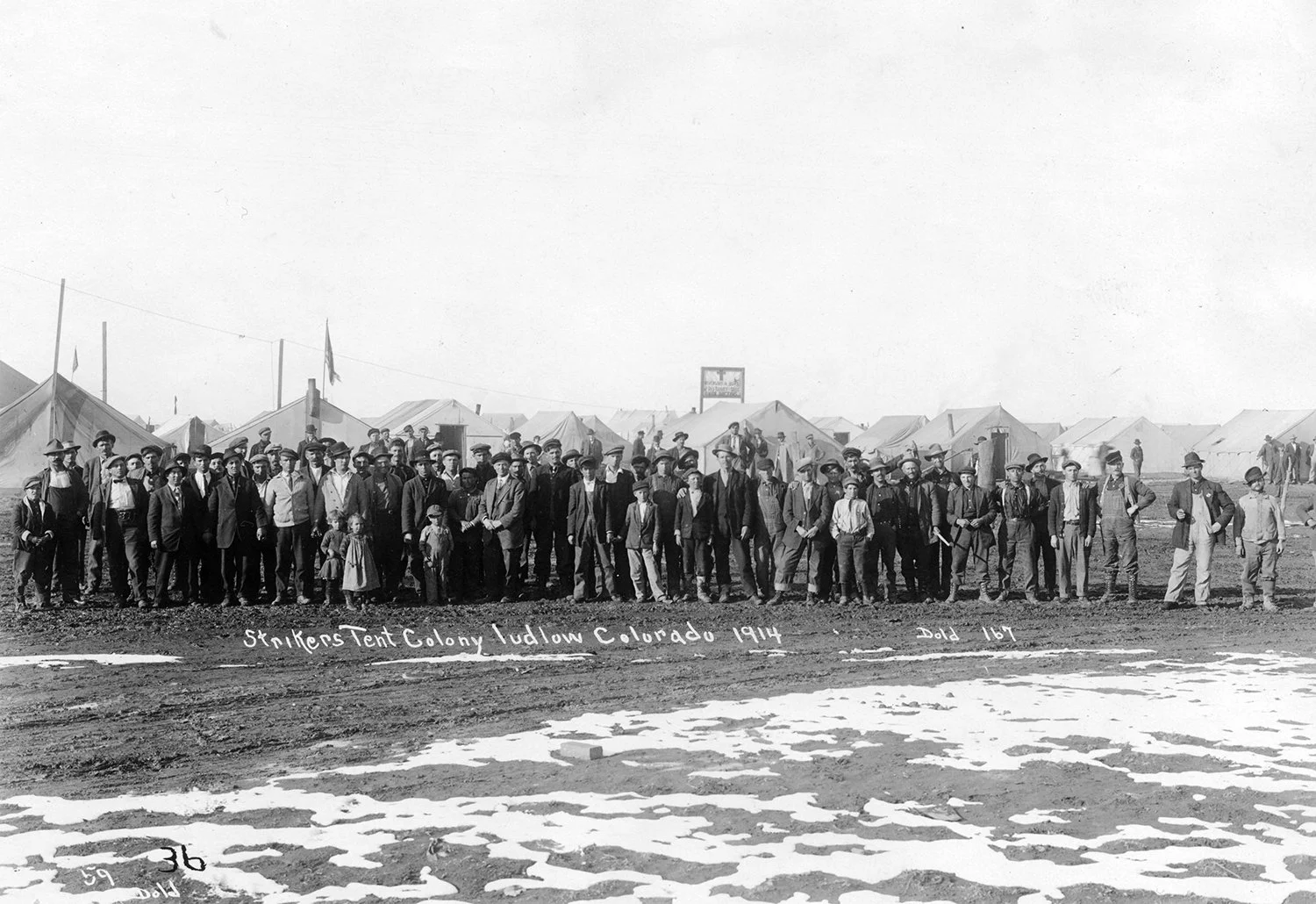
Panoramic black and white photograph showing rows of men assembled at the Ludlow Colorado tent colony in 1914.
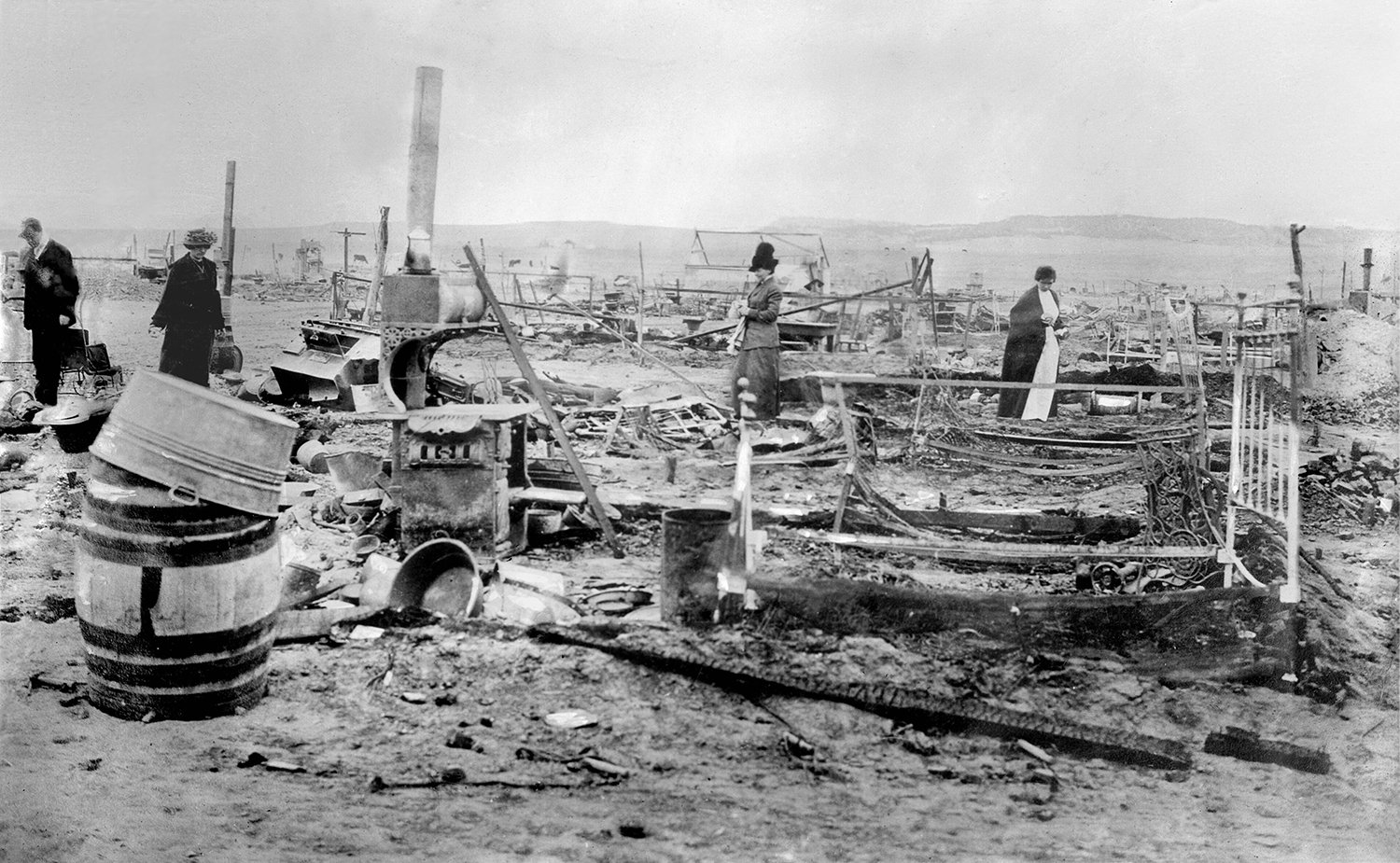
Ruins of the Ludlow Colony near Trinidad, Colorado.
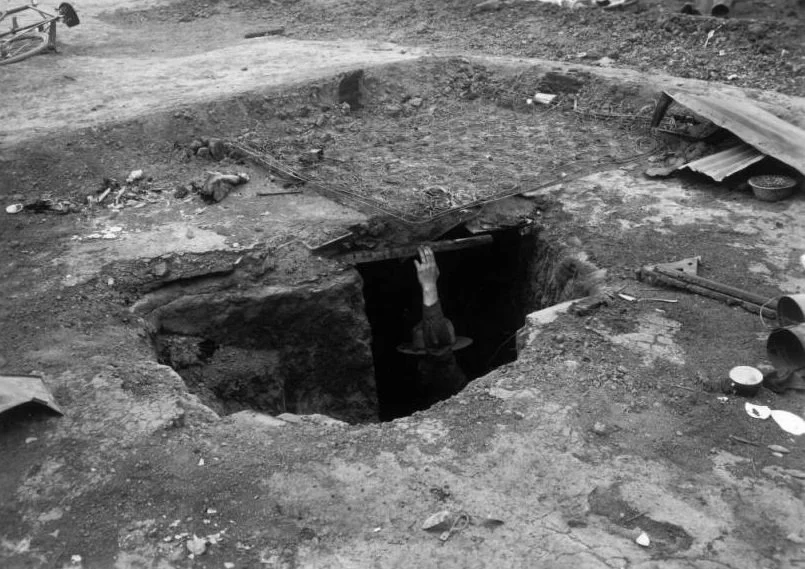
Underground shelter in which women and children died.

Armed United Mine Workers of America strikers. Ludlow, Colorado 1914.
During these horrific events, union leader Tikas was captured, beaten, and executed. He bled to death from three gunshot wounds in the back. Rage scoured the dry, dusty soil as a biblical flood of retaliatory violence swept across the Raton Mesa. Enraged miners armed themselves, attacked mines, destroyed infrastructure, and sabotaged railroads. Dozens more were killed as the Colorado Coalfield War drew federal attention, prompting President Woodrow Wilson to send U.S. troops to restore order and disarm both sides.
Despite these dramatic developments, the strike ultimately collapsed without the miners winning formal recognition or most of their demands. Nevertheless, the events at Ludlow came to symbolize accelerating efforts to bargain for greater labor rights, protections against child labor, the eight-hour workday, a federal minimum wage, the right to be paid in US currency, overtime pay requirements, workplace safety, unemployment insurance, old-age pensions, and corporate accountability. In 1915, the House Committee on Mines and Mining published its findings, lending federal authority to what the miners had proclaimed all along — that children were dying for coal, that the workday had no end, and that workers should not be paid in scrip redeemable only at the store of the man who paid them.
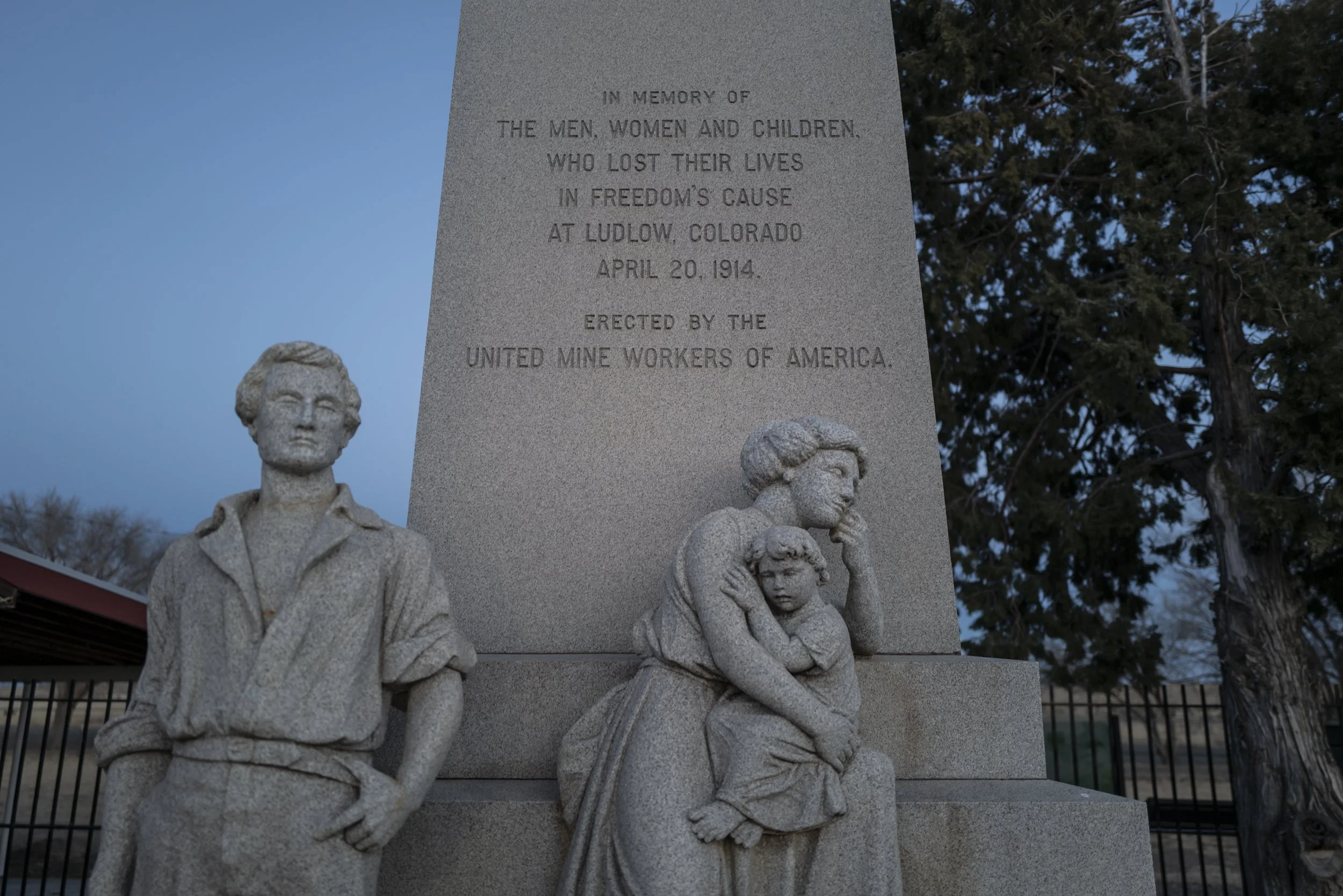
“In memory of the men, women and children who lost their lives in freedom’s cause at Ludlow, Colorado April 20, 1914. Erected by the United Mine Workers of America.”
As this era of conflict ended, the widespread use of armed force and violence against workers became a liability that triggered congressional investigations, forcing John D. Rockefeller Sr. to testify publicly about Colorado Fuel & Iron Company labor practices, acknowledging that even after knowing of the guards’ atrocities, he would have taken no action to prevent the attacks.
This investigative model acts as the backbone of the oncoming wave of New Deal labor reforms, fundamentally reshaping the relationship among workers, employers, and the federal government during the Great Depression.
No one was charged, sanctioned, or criminally prosecuted for what happened at Ludlow, yet a crack in public tolerance for unchecked corporate power had activated a country.
In 1918, the tent colony, long lost to prevailing winds, was commemorated with a monument to those killed during the strike. A few miles from Interstate 25, outside Trinidad, you can visit the memorial, designated a National Historic Landmark on January 16, 2009.
Under President Franklin D. Roosevelt’s administration, Congress enacted:
National Labor Relations Act (Wagner Act, 1935) — the right to unionize, collective bargaining and establishes the National Labor Relations Board to enforce that right.
Fair Labor Standards Act (1938) — establishes minimum wage, overtime pay and restrictions on child labor.
Social Security Act (1935) — unemployment insurance and old age pensions.